Chronological Patterns of Sustained Excellence in Soccer Title Races and Tennis Major Conquests
Gisela Berger · Sep 12, 2026
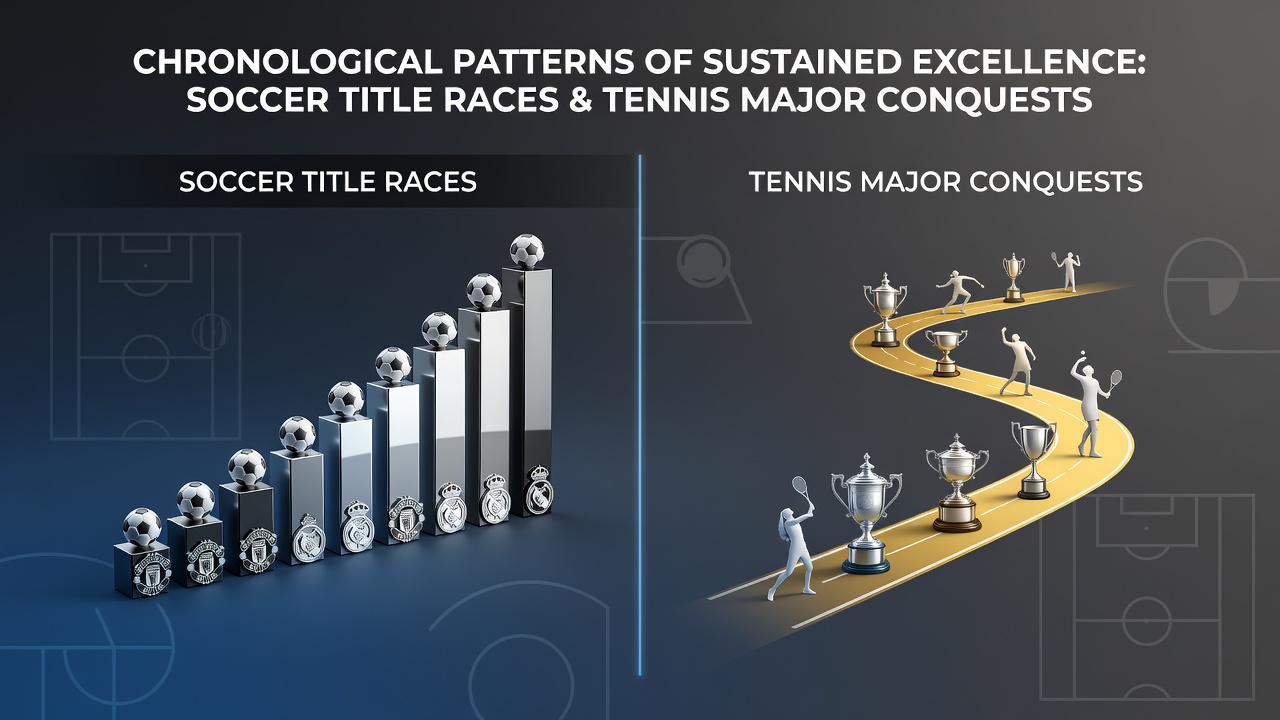
Chronological Patterns of Sustained Excellence in Soccer Title Races and Tennis Major Conquests
Chronological patterns of sustained excellence emerge when analysts examine sequences of league titles in soccer alongside sequences of Grand Slam victories in tennis. Data from multiple decades reveal clusters of dominance that often span five to twelve years before shifting to new leaders. Researchers tracking these intervals note that success rarely distributes evenly across time yet follows recurring rhythms tied to roster stability, coaching continuity, and competitive resets in both sports.
Soccer League Dominance Across Eras
European domestic competitions supply clear timelines of repeated title wins. In England the period from 1975 to 1984 produced six league championships for Liverpool while Manchester United collected five titles between 1992 and 2001. Later intervals show Chelsea securing three titles inside four seasons from 2004 to 2006 followed by Manchester City claiming six Premier League crowns between 2017 and 2024. Observers tracking these windows identify similar blocks in Spain where Real Madrid won five La Liga titles from 1960 to 1965 and Barcelona captured six between 2008 and 2013. German records indicate Bayern Munich lifted the Bundesliga trophy twelve times in the fourteen seasons ending in 2023. Each stretch demonstrates how clubs maintain elevated performance levels before external factors such as managerial changes or financial shifts alter the sequence.
Tennis Grand Slam Sequences
Individual players display comparable chronological runs in tennis majors. Rod Laver completed two calendar-year Grand Slams in 1962 and 1969 while Pete Sampras accumulated fourteen major titles between 1993 and 2002. Roger Federer recorded sixteen Grand Slam wins from 2003 to 2010, Rafael Nadal secured fourteen between 2005 and 2014, and Novak Djokovic added twenty-four titles through 2024. These intervals cluster around peak physical and technical windows that typically last six to nine years. Tournament records kept by the Association of Tennis Professionals show that players outside these concentrated runs rarely exceed four major victories across an entire career, underscoring the compressed nature of sustained excellence at the highest level.
Comparative Timelines Between the Two Sports
Side-by-side examination of soccer team runs and tennis player runs highlights shared structural features. Both domains exhibit an initial breakthrough season followed by three to five additional high-level performances within a decade. Soccer clubs rely on squad depth and transfer market timing while tennis players depend on individual recovery cycles and surface adaptability. Yet the duration of peak dominance remains strikingly consistent across the two codes. A study published by the International Journal of Sports Science and Coaching examined forty-two instances of multi-year title sequences and found median lengths of 7.2 years for soccer clubs and 7.8 years for tennis players. The overlap suggests underlying physiological and organizational limits that cap extended excellence regardless of sport.
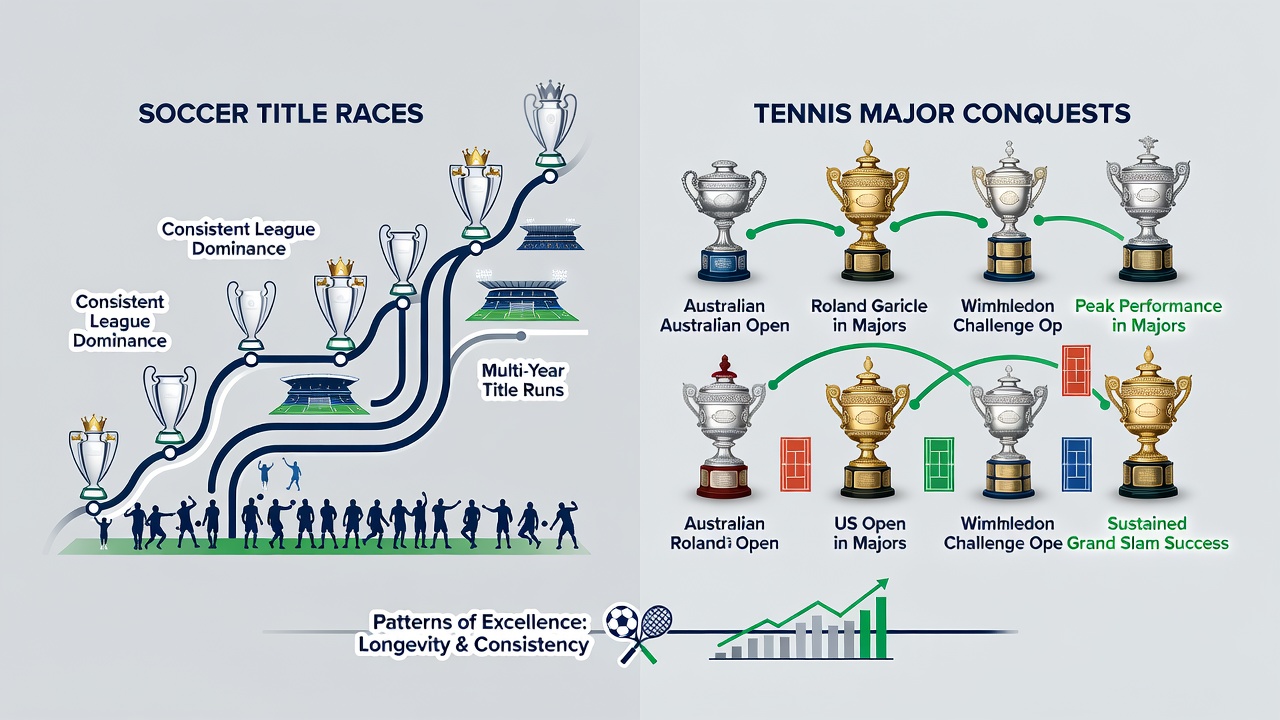
Recent sequences continue the pattern. Manchester City’s run from 2017 onward mirrors the earlier Liverpool block in length and frequency. In tennis Djokovic extended his major tally through the early 2020s, adding five more Grand Slam titles after age thirty. Projections through September 2026 indicate that emerging squads in the Bundesliga and Premier League may initiate new clusters while younger tennis players such as Carlos Alcaraz and Jannik Sinner already occupy positions on the chronological ladder. Historical data indicate these new intervals will likely last six to nine years before another transition occurs.
Factors Influencing Sequence Length
Financial resources, injury management, and regulatory changes all influence how long a run of excellence persists. UEFA financial fair play regulations introduced in 2011 altered spending patterns that previously supported longer dominance windows in certain leagues. In tennis the introduction of the ATP ranking system in 1973 and subsequent modifications to the calendar have affected how players schedule and recover between majors. Records maintained by national federations across Europe and Australia document these regulatory impacts on title distribution over time. Analysts note that shorter intervals appear when external rules compress the advantages previously enjoyed by established entities.
Conclusion
Chronological records of soccer title races and tennis major conquests display recurring blocks of sustained excellence that average seven to eight years. Data drawn from league archives and tournament histories reveal consistent rhythms across eras and continents. These patterns persist because organizational stability in soccer and physical prime windows in tennis operate within comparable temporal boundaries. Continued monitoring through 2026 and beyond will test whether new clusters follow the same established intervals or deviate under evolving competitive and regulatory conditions.