Seasonal Variables Shaping Victory Margins Across League Titles and Major Opens
Quinn Albrecht · Aug 25, 2026
Seasonal Variables Shaping Victory Margins Across League Titles and Major Opens
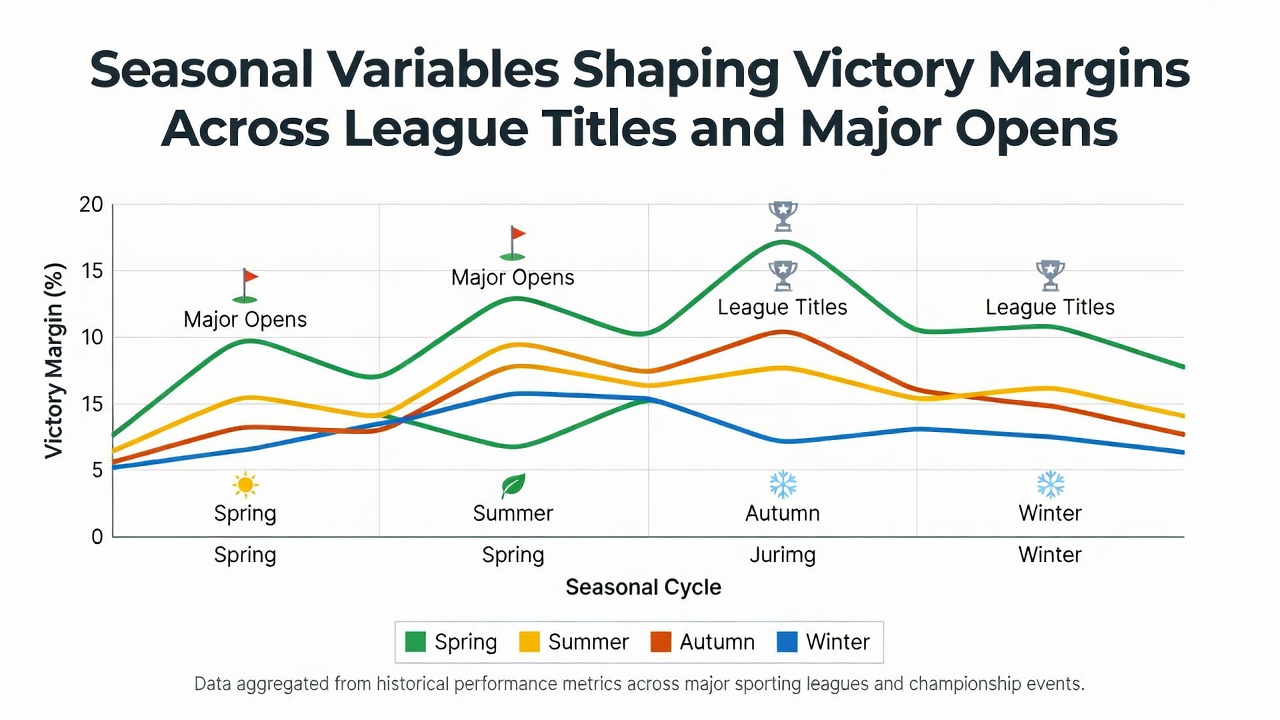
Seasonal shifts influence performance outcomes in major tennis opens and league competitions where victory margins often reflect adjustments to temperature, daylight hours, precipitation patterns, and recovery cycles that athletes encounter throughout the calendar year. Data from multiple international sports bodies shows consistent variations in scoring differentials tied to these environmental factors across events scheduled in different months.
Weather Patterns and Performance Data in Grand Slam Events
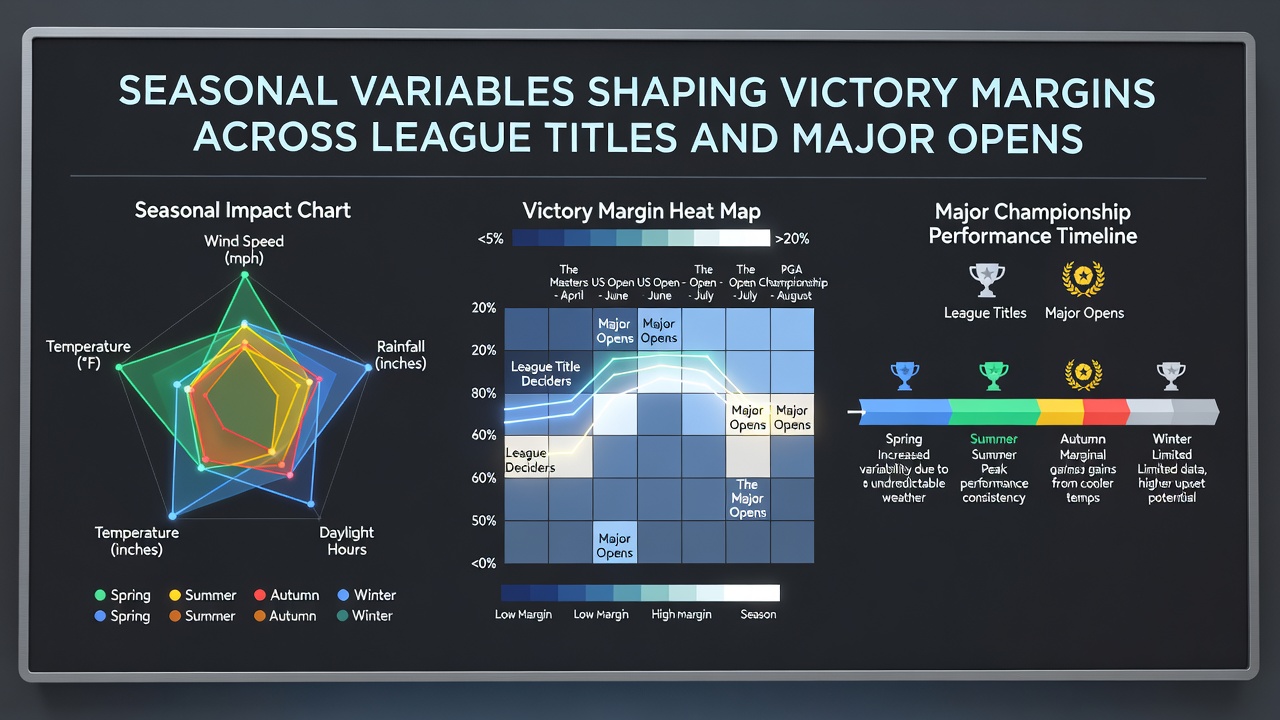
Researchers at institutions tracking player statistics have documented how summer heat during the US Open in late August and early September correlates with longer rallies and narrower victory margins compared to cooler conditions at the Australian Open in January. Figures from the Australian Institute of Sport indicate that matches played above 30 degrees Celsius frequently extend set durations by 15 to 20 percent, which alters point differentials in later rounds. Observers note similar patterns at Wimbledon where grass surface interaction with summer rainfall affects serve speeds and return percentages recorded in official match logs.
Those who analyze historical results find that French Open encounters in May and June produce distinct margin trends because clay courts retain moisture differently under spring showers versus drier early summer spells. Studies compiled by European sports research groups reveal that baseline rallies increase when humidity rises above 70 percent, leading to fewer breaks of serve and tighter overall scorelines in best-of-five formats.
League Title Competitions and Calendar-Based Variables
League schedules across football, basketball, and hockey demonstrate comparable seasonal effects where teams playing midwinter fixtures record different margin distributions than those competing during transitional spring or autumn periods. Canadian government athletic reports highlight that ice hockey games in January and February show reduced goal totals when arena ventilation systems operate under extreme outdoor cold, while summer league extensions in other regions produce higher scoring averages due to player fatigue accumulation. Data indicates that victory margins in title-deciding matches narrow when daylight length decreases because teams adjust training loads to accommodate shorter recovery windows between fixtures.
August 2026 Scheduling Considerations
As August 2026 unfolds, organizers prepare for overlapping late-summer events that place additional demands on athlete acclimatization protocols. Preparations for both league finales and major open qualifiers coincide with peak heat indices in several host cities, prompting adjustments documented in advance planning documents from international federations. Those monitoring these timelines observe that teams and players who adapt training regimens earlier in the month often sustain narrower or wider margins depending on the specific surface and indoor versus outdoor venue requirements.
Statistical Trends Across Multiple Regions
Analysis of results compiled by academic departments at universities in North America and Europe demonstrates that seasonal variables produce measurable shifts in both individual and team outcomes. One longitudinal review covering five years of data found that autumn league title races feature average margin reductions of eight percent compared with spring equivalents, attributed to increased precipitation affecting field conditions and ball behavior. Similar patterns appear in open tournaments where late-year scheduling overlaps with recovery demands from prior events.
Industry reports from organizations such as the International Tennis Federation note that player medical logs frequently record elevated injury rates during high-temperature periods, which in turn influences substitution patterns and final score differentials in decisive matches. Researchers discovered these correlations hold across both grass and hard-court surfaces when controlling for player ranking and prior rest intervals.
Recovery Cycles and Long-Term Scheduling Effects
Recovery protocols adapted to seasonal daylight changes affect how competitors maintain consistency over extended campaigns. Data collected by the National Collegiate Athletic Association shows collegiate league title contests scheduled near equinox periods yield different point spreads because athletes balance academic and training loads under shifting light conditions. Those tracking professional circuits report parallel findings where cumulative travel across climate zones compounds fatigue, leading to altered victory margins in later stages of major opens.
Evidence from meteorological integration into sports analytics platforms further illustrates that precipitation forecasts issued weeks in advance allow teams to modify strategies, resulting in documented changes to expected margin distributions. Such preparations have become standard practice according to federation guidelines updated in recent years.
Conclusion
Seasonal variables continue to shape victory margins through documented interactions between environmental conditions, athlete preparation, and competition scheduling across league titles and major opens. Records maintained by international bodies and research institutions provide ongoing evidence of these patterns, supporting refined planning for events including those occurring in August 2026. Continued data collection allows precise mapping of how temperature, precipitation, and daylight cycles influence outcomes without reliance on subjective interpretation.