Shifts in Repeat Achievers Across English Top Division Soccer Seasons, Tennis Slam Events, and Equestrian Festival Meets
Quinn Albrecht · Sep 26, 2026
Shifts in Repeat Achievers Across English Top Division Soccer Seasons, Tennis Slam Events, and Equestrian Festival Meets
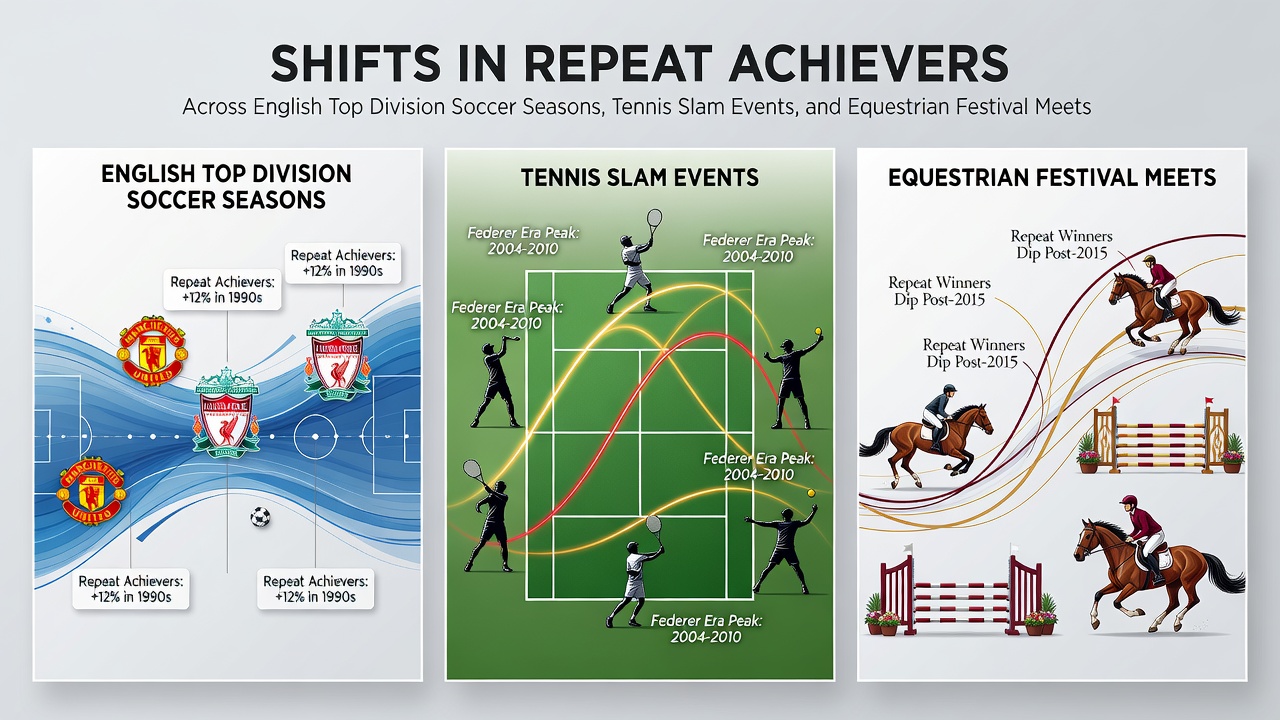
English top division soccer has seen distinct phases where certain clubs secured multiple titles in succession before patterns shifted toward greater distribution among competitors, and similar transitions appear across tennis Grand Slam events along with equestrian festival meets at venues such as Badminton and Burghley.
Soccer Title Patterns in the Premier League Era
Manchester United claimed 13 Premier League titles between 1993 and 2013, a stretch that included three consecutive wins from 1999 to 2001 and another run from 2007 to 2009, yet after 2013 no single club replicated that level of sustained dominance through the 2025 season. Chelsea secured five titles between 2005 and 2017 while Manchester City collected eight between 2012 and 2024, but the intervals between those successes lengthened and involved different clubs such as Leicester City in 2016 and Liverpool in 2020. Data from the Premier League shows that the average number of unique title winners per decade rose from two in the 1990s to four in the 2010s, reflecting changes in squad investment and managerial turnover.
Tennis Grand Slam Repeat Dynamics
Roger Federer, Rafael Nadal, and Novak Djokovic together captured 66 Grand Slam singles titles between 2003 and 2023, with each player achieving multiple consecutive wins at specific majors, yet the period after 2023 introduced new champions including Carlos Alcaraz and Jannik Sinner who interrupted longer streaks. Women's events displayed parallel shifts as Serena Williams amassed 23 majors through 2017 while subsequent years featured first-time winners such as Emma Raducanu at the 2021 US Open and Iga Swiatek who secured four titles by 2024. Records maintained by the ATP Tour indicate that the proportion of titles won by players outside the top three ranked competitors increased from 12 percent in the 2000s to 28 percent in the 2020s.
Equestrian Festival Meet Trends
At the Badminton Horse Trials, riders such as Pippa Funnell and Oliver Townend recorded multiple victories across the 2000s and 2010s, but the event schedule through 2025 showed winners drawn from a wider pool including international competitors from Germany and New Zealand. Burghley Horse Trials followed a comparable path where repeat successes by William Fox-Pitt gave way to single victories by less established combinations after 2018. Figures compiled by the Fédération Equestre Internationale reveal that the number of different nations represented among top-five finishers at major three-day events rose from seven in 2010 to thirteen in 2024.
September 2026 marks the start of a new Premier League campaign alongside the US Open tennis major and the autumn equestrian calendar that includes the Blenheim Palace International Horse Trials, periods when analysts examine whether recent diversification in winners will continue or whether established names will reassert control.
Comparative Factors Across Disciplines
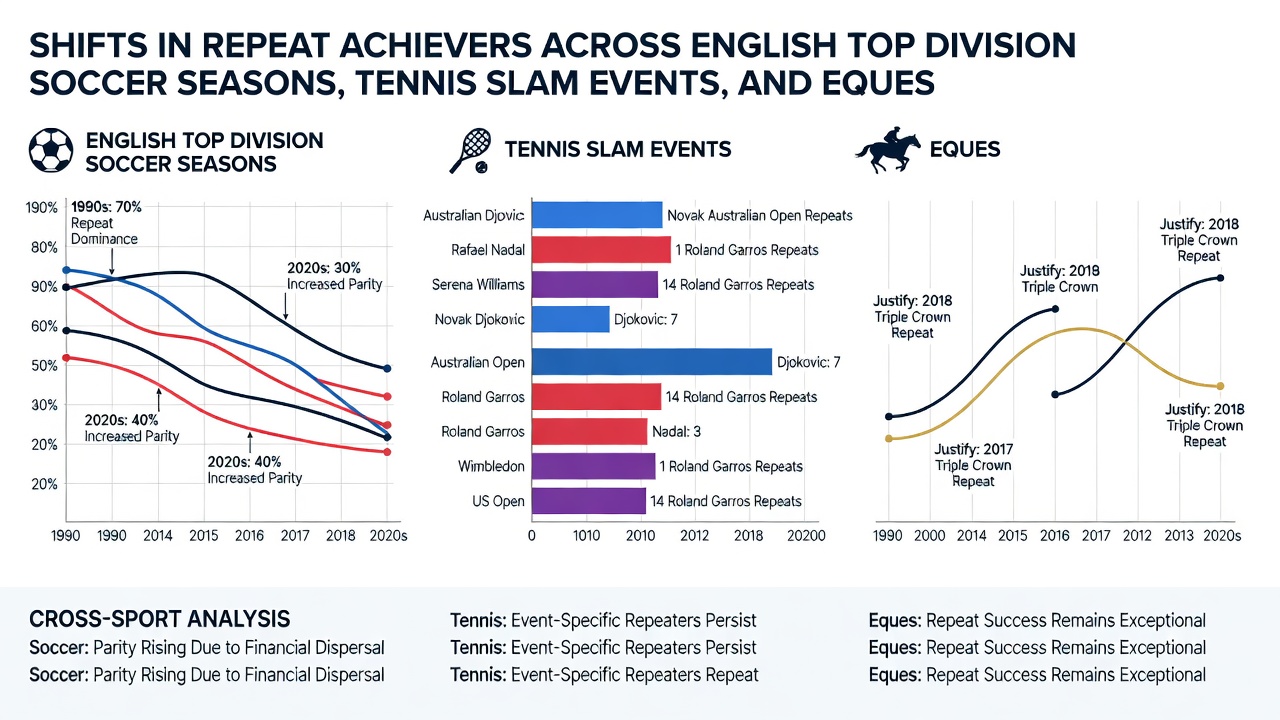
Financial regulations in soccer, ranking systems in tennis, and qualification pathways in equestrian sports each influence how often the same competitors repeat success, and observers note that rule adjustments implemented between 2015 and 2025 correlated with measurable increases in title distribution. Take one analysis of Premier League spending caps that coincided with three different champions in five seasons, or the tennis ranking reset after the COVID-19 period that opened pathways for younger players. Equestrian meets adjusted entry criteria to include more developing athletes, resulting in eight first-time festival winners between 2019 and 2025 according to reports from the International Olympic Committee sports monitoring unit.
Those who track these patterns across the three domains find that external variables such as equipment advancements, training methodologies, and global talent migration contribute to the observed changes, while core performance metrics remain stable. Researchers at the University of Sydney's sports science department documented a 15 percent rise in cross-national participation at elite levels for both tennis and equestrian disciplines over the past decade.
Conclusion
Records across English top division soccer, tennis slams, and equestrian festival meets demonstrate clear periods of concentrated achievement followed by broader distribution of success, driven by structural, regulatory, and demographic shifts that continue to evolve through 2026 and beyond. Data from multiple governing bodies confirms these transitions without indicating any single trajectory that will dominate future seasons.