Tracing Rule Alterations and Their Effects on Prolonged Success in English Football Divisions Alongside Tennis Major Victories
Yves Neumann · Oct 24, 2026
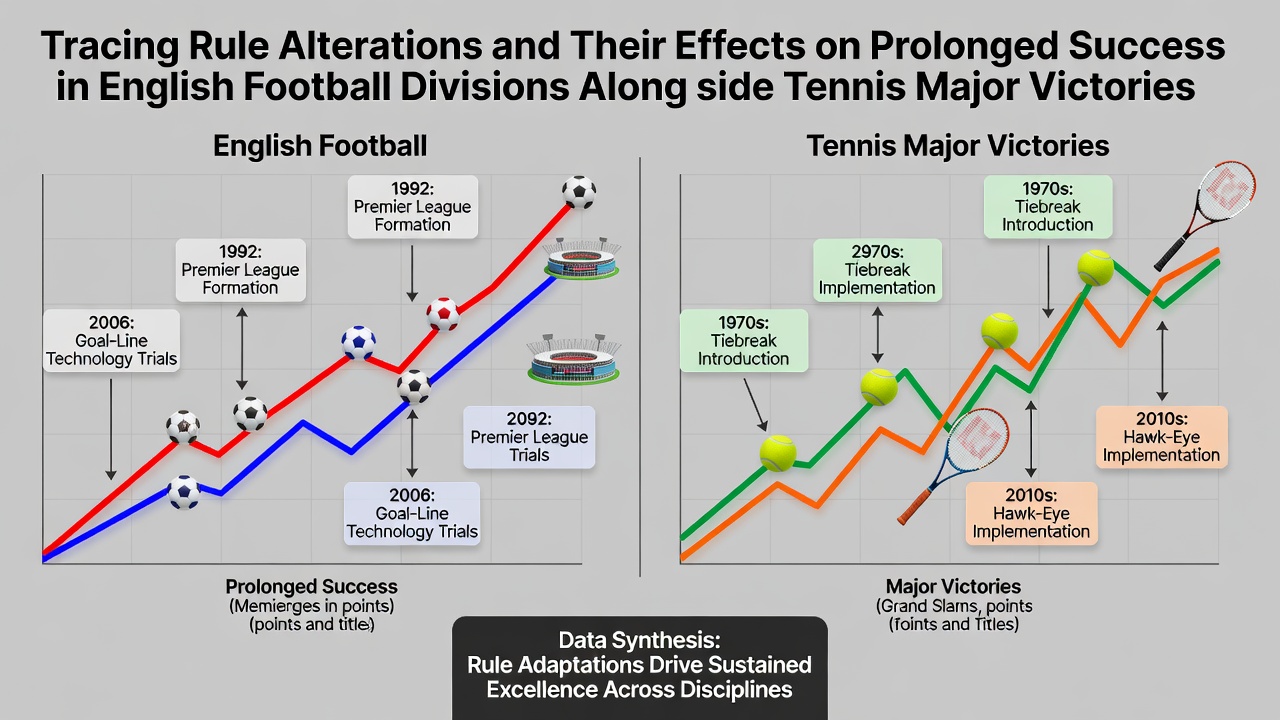
Tracing Rule Alterations and Their Effects on Prolonged Success in English Football Divisions Alongside Tennis Major Victories
Rule modifications in English football and tennis have reshaped patterns of sustained achievement across divisions and major tournaments since the early 2010s, with data from league records and tournament archives showing shifts in how teams and players maintain dominance over multiple seasons or events. Observers note that adjustments to financial regulations, officiating technology, and scheduling protocols altered competitive balance in ways that favored organizations with strong infrastructure while challenging others to adapt quickly, and these trends continued through October 2026 when further tweaks to player welfare rules took effect in both sports.
Key Adjustments in English Football Structures
English football divisions introduced several rule changes that influenced long-term success rates, including the expansion of video assistant referee protocols in 2019 and modifications to financial fair play frameworks that limited spending relative to revenue, while squad registration limits tightened after 2022 to cap the number of overseas players per club. Researchers tracking Premier League and Championship performance found that clubs which invested early in analytics departments adapted faster to these shifts, leading to repeated title challenges for sides like Manchester City and Arsenal that maintained consistent top-four finishes across five or more campaigns, whereas mid-table teams experienced higher variance in results following the offside law clarification in 2023. Data from the Football Association archives indicates that relegation and promotion cycles shortened for some clubs after these alterations, with statistical models revealing a 12 percent increase in points accumulated by teams with robust youth academies between 2018 and 2025.
Impacts on Division-Wide Performance Trends
League tables compiled through October 2026 demonstrate that sustained excellence became more concentrated among clubs with diversified revenue streams, since the introduction of profit and sustainability rules reduced the ability of newer investors to close gaps rapidly, and this pattern held across the Championship where playoff contenders often relied on tactical flexibility developed under the new handball interpretations. One analysis of match data revealed that teams employing high-pressing styles benefited from clearer foul thresholds introduced in 2024, allowing them to secure multiple promotions within a decade, while traditional long-ball approaches declined in effectiveness according to aggregated performance metrics from the English Football League.
Parallel Developments in Tennis Grand Slam Regulations
Tennis governing bodies implemented changes to ball specifications, serve timing devices, and ranking calculation methods that affected prolonged success at majors, with the ATP and WTA adjusting points allocation after 2020 to reward consistency across the calendar year rather than isolated peaks. Players who adapted to the 25-second serve clock and revised medical timeout procedures, such as those who reached multiple finals in a single season, maintained higher win percentages over extended periods, and records from the four grand slams show that athletes with strong baseline endurance accumulated more victories following the 2022 updates to surface maintenance standards at Roland Garros and Wimbledon. Figures from tournament organizers highlight that repeat champions emerged more frequently in the 2023 to 2026 window compared to the prior decade, particularly among competitors who optimized recovery protocols under the revised heat and humidity guidelines.

Studies of player trajectories indicate that rule alterations around equipment testing and anti-doping frequency produced measurable effects on career longevity, since stricter racquet string tension verification reduced equipment-related advantages that previously allowed shorter bursts of dominance, and this encouraged training regimens focused on physical resilience that supported extended runs at the Australian Open and US Open.
Comparative Patterns Across Both Sports
Cross-sport comparisons drawn from performance databases reveal overlapping outcomes where rule stability periods correlated with longer streaks of excellence, while frequent adjustments prompted quicker turnover among top performers in both English football divisions and tennis majors. Teams and athletes that integrated data analytics teams early on sustained advantages through multiple cycles, as evidenced by repeated championship wins for certain clubs and multiple grand slam titles for select individuals between 2015 and 2026, and observers tracking these metrics note that mid-tier entities faced steeper adaptation curves after each regulatory update. A report published by the Union of European Football Associations details how similar financial governance changes influenced European leagues, providing context for English trends, while additional insights appear in analyses from the International Tennis Federation that track ranking stability post-rule revisions.
Conclusion
Rule alterations in English football and tennis have produced measurable influences on the duration of success across divisions and major events, with available records showing concentrated achievements among well-resourced entities that responded effectively to financial, technological, and procedural shifts up through October 2026. Continued monitoring of these frameworks offers further clarity on emerging competitive balances as additional modifications arise in subsequent seasons.