UK Retail Sports Betting Sector Navigates Declining Premises and Market Pressures
Yves Neumann · Aug 29, 2026

UK Retail Sports Betting Sector Navigates Declining Premises and Market Pressures
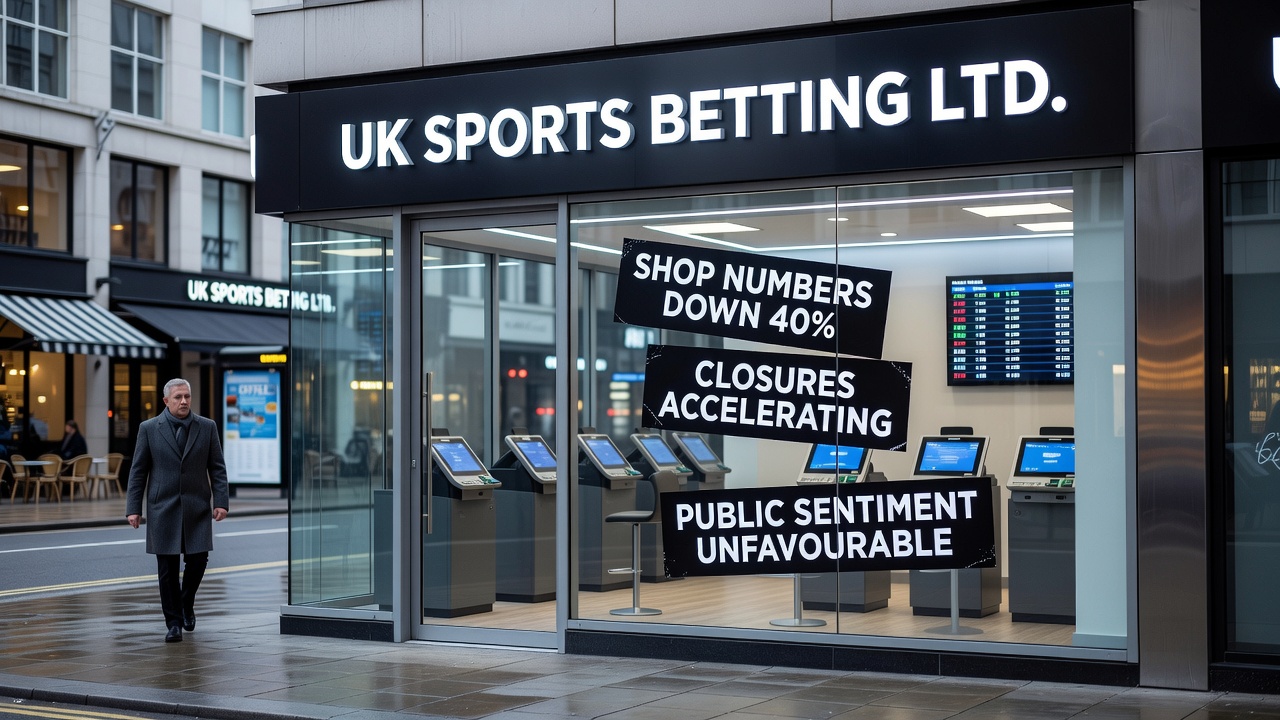
The UK retail sports betting sector continues to experience significant contraction as shop numbers decline steadily amid wider economic and regulatory challenges. Figures reveal a drop from a peak of 9,128 premises in 2012 down to 5,789 by 2025, while adult gaming centres have fallen to just 1,415 locations across the country. This reduction reflects ongoing pressures from unfavourable public perceptions, political scrutiny, and difficulties facing high street retail environments in general. Data indicates that operators have seen revenue per remaining shop climb 37 percent since 2019, even though the total number of shops has decreased by 24 percent during that period. Observers note that consolidation allows surviving locations to capture more business from a smaller overall footprint. Yet the trend also highlights how the sector adapts by concentrating activity in fewer sites while broader market conditions remain tough.Tracking the Long-Term Decline in Betting Premises
Betting shop counts have followed a consistent downward path over more than a decade. The reduction from over 9,000 locations in 2012 to under 6,000 by 2025 shows a clear pattern of closure and rationalisation. Adult gaming centres face similar contraction, reaching only 1,415 premises by the same year. Those who monitor industry statistics point out that these figures represent the cumulative effect of multiple factors, including shifts in consumer behaviour and increased competition from online platforms.
High street challenges compound the situation because many betting shops share the same retail environment as other struggling businesses. Reduced footfall on traditional shopping streets affects visibility and accessibility for these outlets. Researchers tracking premises data find that operators respond by closing underperforming sites rather than expanding into new areas.
Revenue Growth per Shop Despite Fewer Locations
Revenue per shop has increased 37 percent since 2019 while overall shop counts fell 24 percent. This combination demonstrates that remaining premises generate higher average returns as competition thins out locally. Industry reports show the pattern holds across both sports betting and gaming centre operations. Operators achieve efficiency gains through better resource allocation and targeted marketing at established sites.
The revenue uplift occurs even as total premises shrink, suggesting that demand concentrates among fewer outlets. Figures from regulatory sources confirm this per-shop improvement alongside the broader contraction. Those analysing gross gambling revenue trends observe that the remaining network sustains profitability through higher utilisation rates at each location.
Local Council Examples Highlight National Trends
Brent council provides a concrete illustration of the pattern in action. The number of gambling premises there fell from 83 in January 2025 to 75 in the most recent count. Similar reductions appear in other local authority areas where licensing decisions and commercial viability both play roles. Local data aligns with national statistics showing gradual attrition rather than sudden closures.
Councils evaluate applications and renewals against criteria that include community impact and responsible gambling measures. The Brent example reflects how individual decisions accumulate into measurable change over time. Observers note that such local variations still follow the same overall direction seen across the UK retail sector.
Reputation and Political Factors Add Pressure
Public and political sentiment toward retail betting remains unfavourable in many quarters. This environment influences both regulatory decisions and commercial strategies. Operators face greater scrutiny over premises location, advertising, and player protection policies. The resulting caution contributes to slower expansion and more frequent closures in marginal locations.
High street retail headwinds extend beyond gambling to include rising costs, changing consumer habits, and competition from online alternatives. Betting shops experience these pressures directly because they rely on physical presence and passing trade. Data shows the combined impact accelerates the shift toward fewer but more efficient outlets.
Developments into August 2026
As of August 2026 the contraction pattern established through 2025 shows no reversal. Shop numbers continue to stabilise at lower levels while per-site revenue metrics remain elevated. Local authorities report ongoing reviews of premises licences that align with national trends. The sector maintains operations through this adjusted footprint, with operators focusing resources on higher-performing sites.
Regulatory data collection continues to track these metrics closely. The figures from 2025 serve as the baseline for measuring further movement in 2026. Those reviewing the statistics note that revenue concentration and premises reduction move in tandem without signs of immediate rebound.
Conclusion
The UK retail sports betting sector faces sustained pressure from declining premises counts, shifting public attitudes, and high street difficulties. Numbers have fallen from 9,128 shops in 2012 to 5,789 in 2025, with adult gaming centres reaching 1,415. Revenue per remaining shop has risen 37 percent since 2019 despite a 24 percent drop in total locations. Local cases such as Brent council, which saw premises decline from 83 to 75, mirror the national picture. The trends persist into August 2026 as operators adapt through consolidation and efficiency measures at surviving sites.